Marmorino
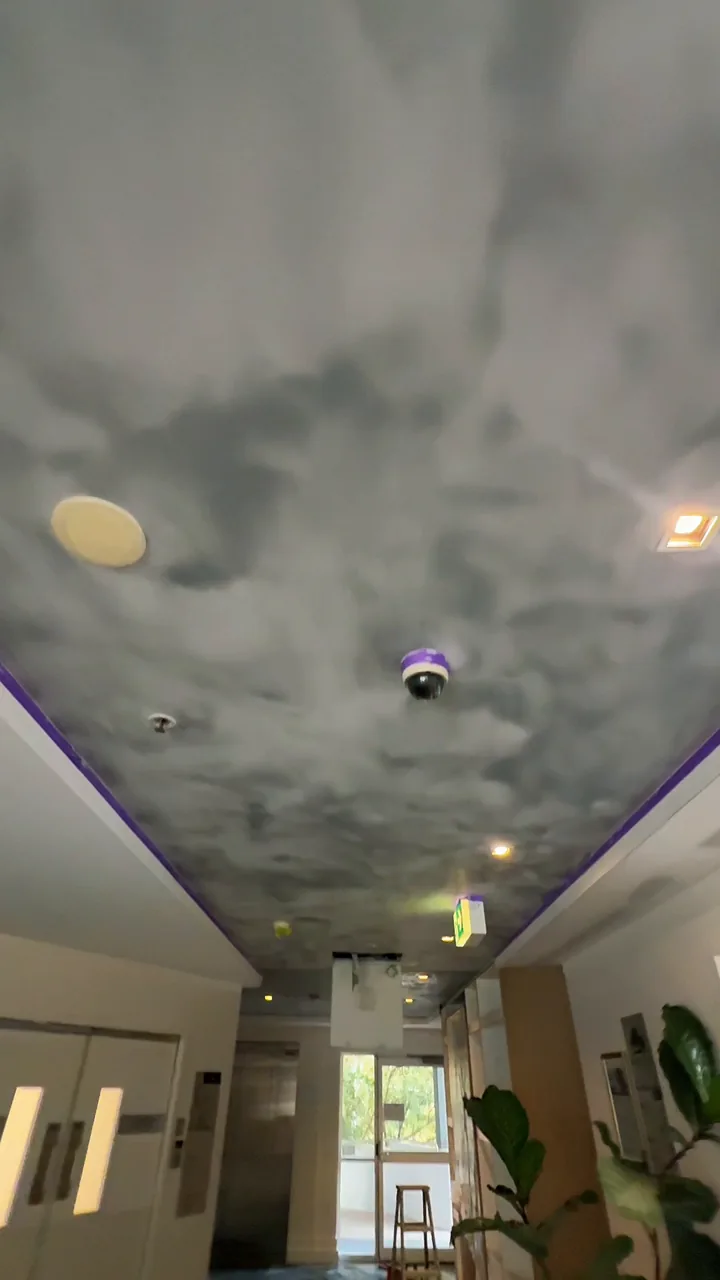
Lime and marble grain. Matte to satin, with soft cloudy movement.
03 — Venetian plaster
Slaked lime and marble dust, laid by hand in thin crossing coats, then burnished until the wall holds light like stone.
What it is
Venetian plaster is a lime finish applied by hand in very thin layers, then compressed with a steel trowel to a soft, stone-like sheen. Every wall has a depth and movement that paint cannot copy.
We build the base with Rasofix, then lay the lime. Lime keeps hardening as it cures, lets the wall breathe and naturally resists mould. It does not peel like paint, and small marks can be repaired and blended in. We tint every job to suit the room.
Anatomy of the finish
Where it works
A statement wall in an entry, stairwell or bedroom.
Warm, textured walls that lift the whole room.
Sealed finishes for powder rooms and spa-like baths.
Receptions, showrooms and restaurants.
Finishes
Studio renders, tinted to suit your space on the day.
Lime and marble grain. Matte to satin, with soft cloudy movement.
The finest lime putty, burnished to a deep, glassy polish.
Stone-effect plaster with the pits and bands of real travertine.
Two finishes on one surface, split by a single sharp line.
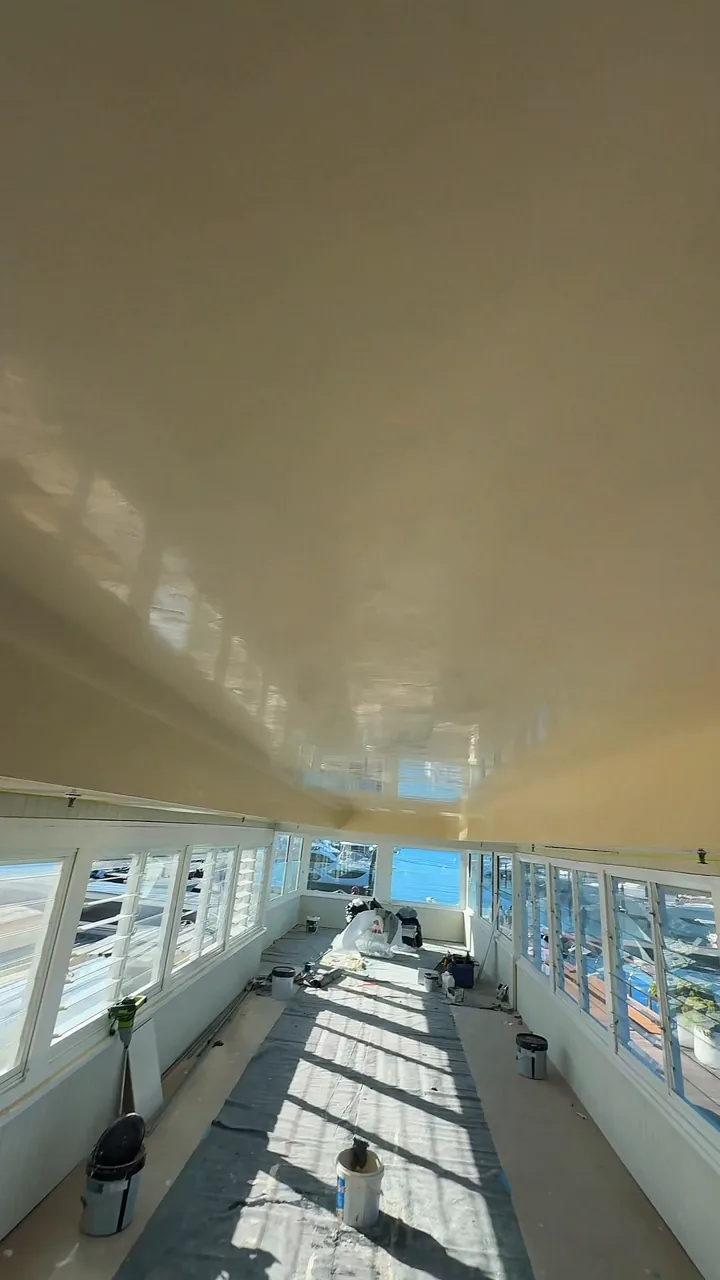
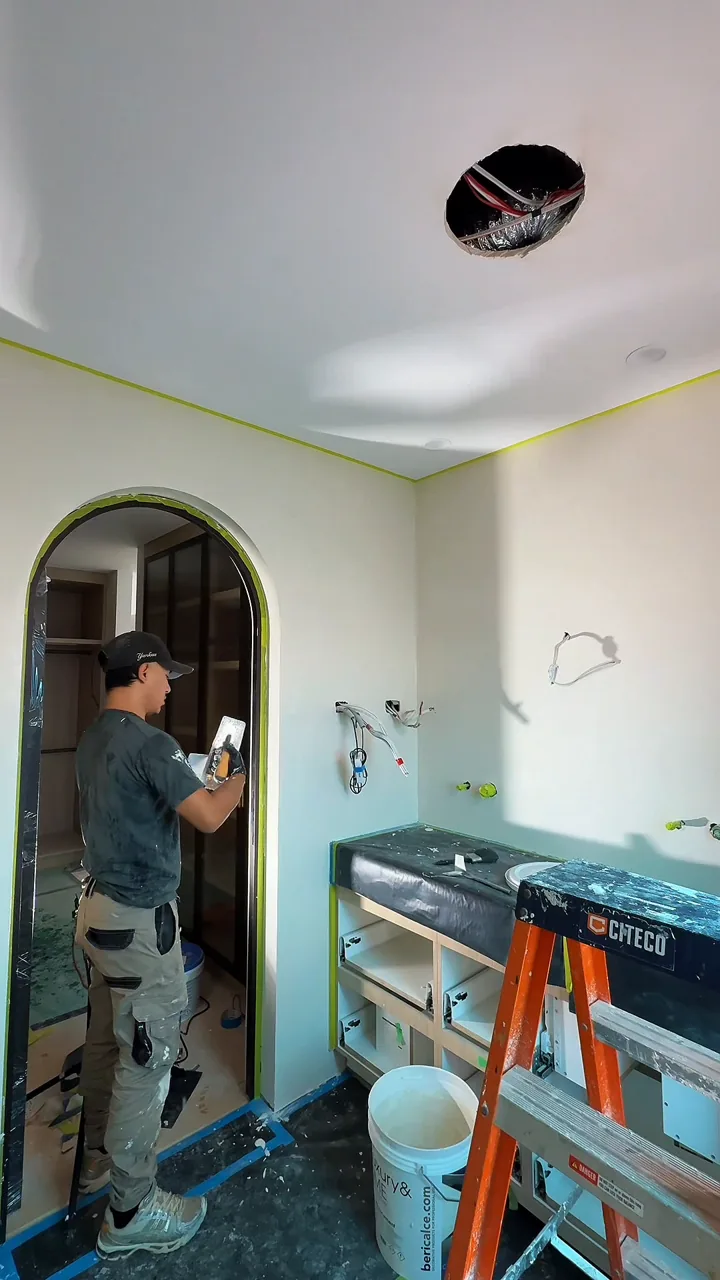
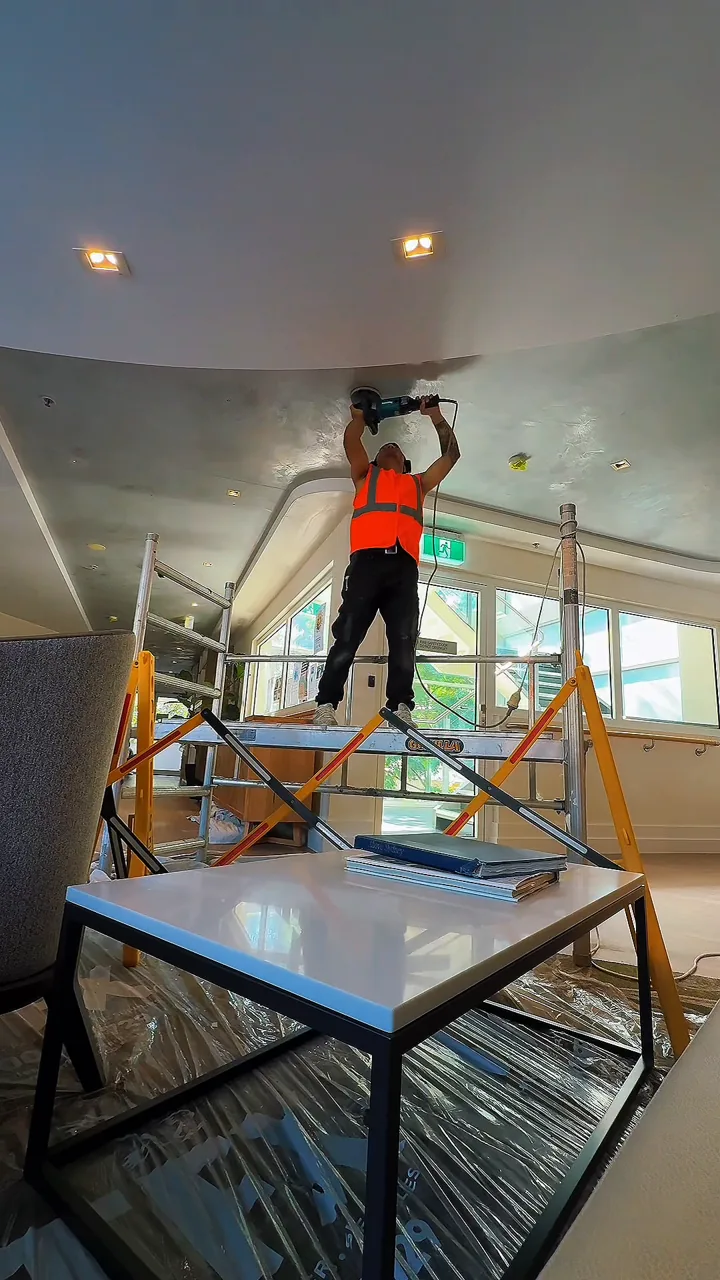
On the tools
Our process
We read the surface before we quote: moisture, level, movement and light.
Moisture · level · movementGrind, patch, prime and mask. Most of a great finish is preparation nobody sees.
Prep ≈ half the jobA Rasofix base coat first, then thin lime coats by hand, each crossing the last.
Hand-appliedWe work to the product’s cure times and the day’s weather, not to a rushed deadline.
Temp · humidity · timeA walk-through, a care guide, and we come back if anything is not right.
Care guide includedFAQ
Price depends on wall area, surface condition, height and access, and the finish you choose. We give a free, fixed quote after a site inspection.
With normal care it lasts for decades. Lime keeps hardening over time, and small marks can be repaired and blended in.
Wipe it with a soft, damp cloth and mild soap. Avoid harsh chemicals. Walls in wet areas may need fresh wax every few years.
A typical feature wall takes 2 to 4 days, including drying time between coats. We confirm the timeline in your quote.
Plasterboard, rendered masonry, concrete and sound painted walls, once they are prepared and primed.
Start a project